Pereiti prie turinio
Raudoname fone baltos spalvos atversta knyga ir pieštukas su tekstu „4 Kokybiškas išsilavinimas“. Pavaizduotas švietimo prieinamumo ir kokybės tikslas.
Oranžiniame fone baltos spalvos pastatų piktograma, įskaitant namą, daugiabutį ir dangoraižį, su tekstu „11 Darnūs miestai ir bendruomenės“. Iliustruojamas siekis kurti saugias, įtraukes ir tvarias gyvenamąsias vietas.
Tamsiai mėlyname fone baltas balandis su alyvmedžio šakele skrenda virš teisėjo plaktuko, šalia tekstas „16 Taika ir teisingumas, stiprios institucijos“. Simbolizuojamas taikos, teisingumo ir institucijų stiprinimo tikslas.
Tamsiai mėlyname fone susijungę penki apskritimai, simbolizuojantys bendradarbiavimą, ir tekstas „17 Partnerystė įgyvendinant tikslus“. Iliustruojamas tarptautinės partnerystės ir bendradarbiavimo skatinimo tikslas.

From National Champions to the World Final: KTU SEB Students in Project Management Competition

Studijos | 2026-09-10

The IPMA Project Management Championship is an international competition that brings together talented university students from around the world to demonstrate their project management knowledge, teamwork, and decision-making skills through realistic business simulations. After winning the Lithuanian National Championship, a team of students from the KTU School of Economics and Business earned the opportunity to represent Lithuania at the IPMA Project Management Championship World Final in Athens, Greece.

Winning the Lithuanian Championship

The IPMA Young Crew Lithuania organized the Project Management Championship Lithuania National Final 2026, in partnership with RNDV/NTX, which designed the competition case. The challenge: take over a construction project that was 60% complete and in crisis, diagnose six real problems within the project, and present solutions in just four hours to a panel of experienced project management professionals.
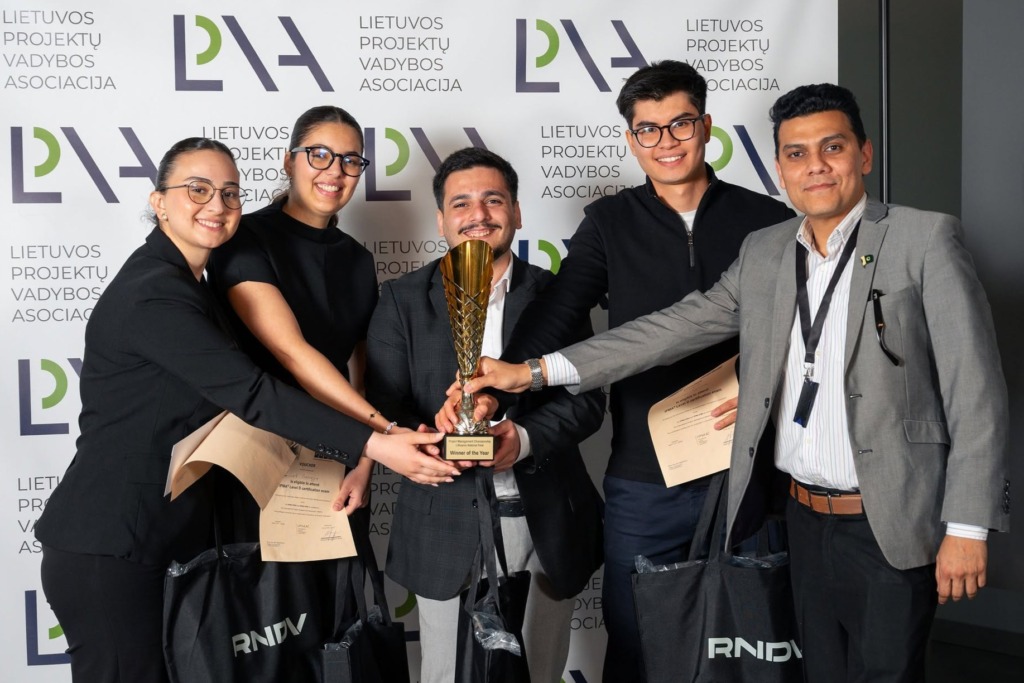
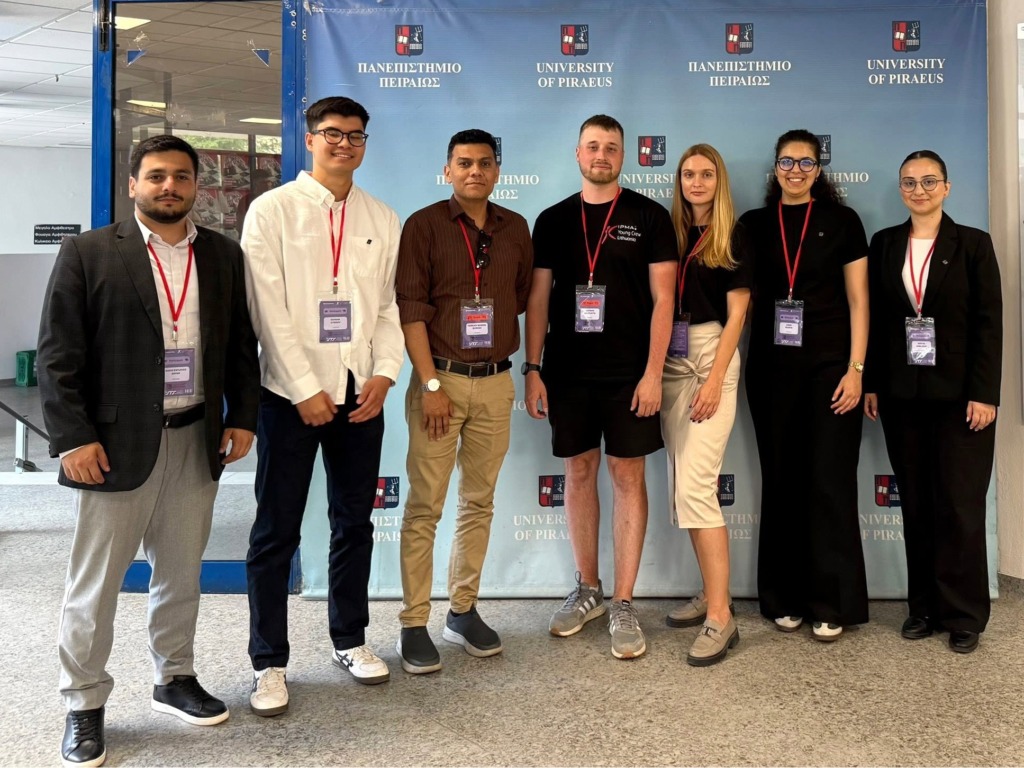
The KTU team consisted of Dovran Eymirov, Kadir Batuhan Şayan, Safiyya Baba-zada, and Zineb Benmya, with guidance from Professor Farrukh Qureshi. Given the time pressure, the team focused its preparation on studying core PM frameworks and theory, so that they could diagnose problems in a structured way rather than jumping straight to solutions.

The team won the National Final, qualifying to represent Lithuania at the IPMA International Project Management Championship in Athens, Greece. For the international final, the format shifted entirely – from a written case study to SimulTrain, a live project simulation platform that the students had never used before.

Representing Lithuania at the World Final in Greece

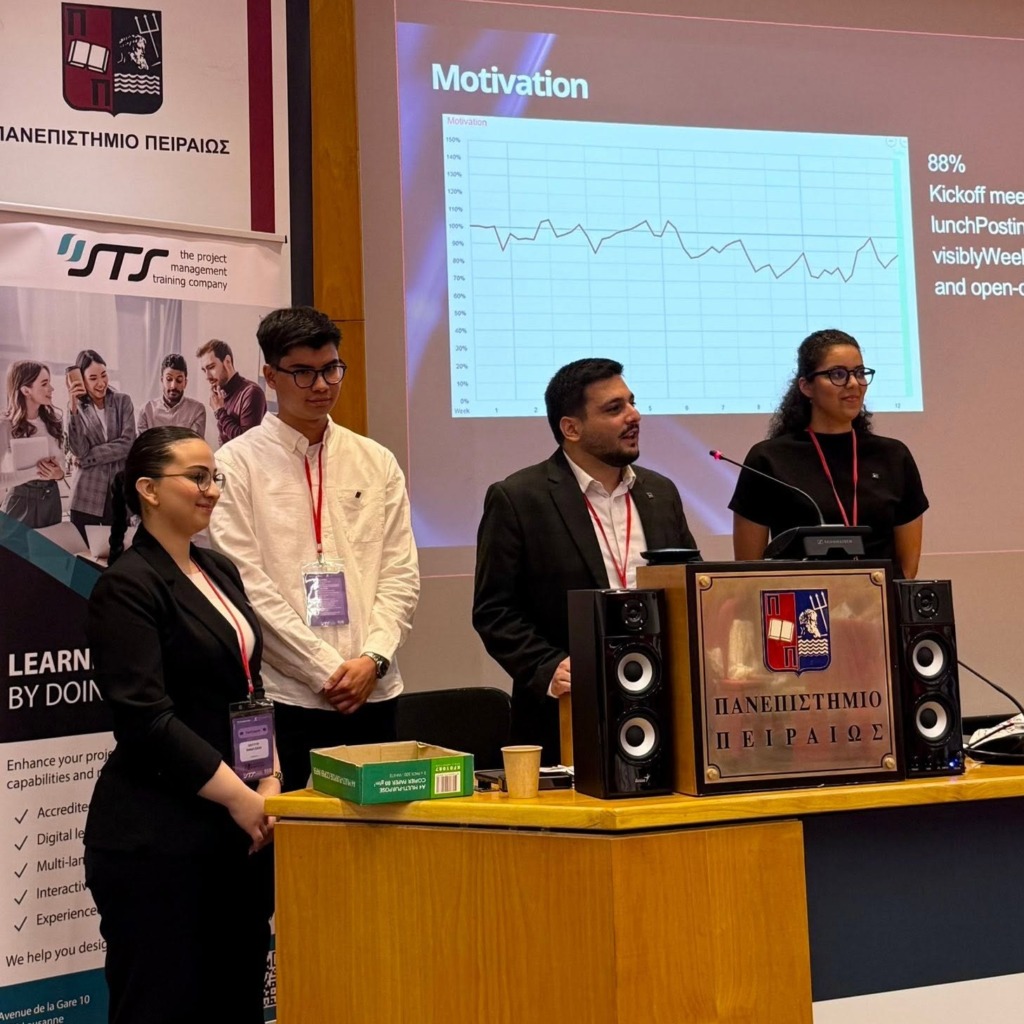
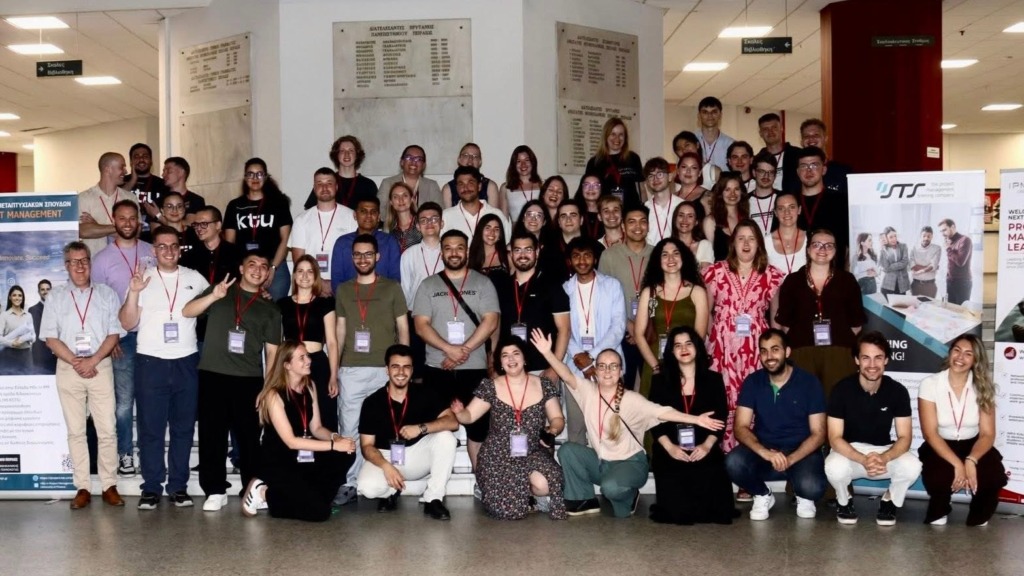
Walking into the World Final for the first time was genuinely exciting for the team. There was a buzz in the venue that felt completely different from that of a national-level competition, with teams from different countries setting up and everyone a little nervous but clearly thrilled to be there. Meeting the other participants turned out to be one of the best parts of the whole trip. The KTU students expected rivals and instead found people who were curious about them and about Lithuania.

GREECE (3)

Carrying the Lithuanian flag and representing KTU also gave the experience a different weight. The students weren’t just competing for themselves anymore, and that turned out to be motivating rather than intimidating.

Student reflections

The World Final left each team member with a different perspective – from personal growth and teamwork to representing Lithuania and lessons they could take into the future.

For Dovran Eymirov, one of the biggest takeaways was learning to trust himself and the team under pressure.

“Going to Athens, I couldn’t fully prepare for what an international-level competition would feel like, and uncertainty was the hardest part. There were moments during the simulation where I doubted a decision the second after making it, but I learned to trust our team’s judgement and keep moving instead of freezing up. Looking back, the biggest takeaway wasn’t a specific skill, it was proving to myself that I could hold my own under real pressure. Standing among top finalists and winners from around the world while representing Lithuania, I felt genuine pride, not in the result alone, but in having earned our place there.”

Dovran Eymirov

The shift from national champions to international competitors was particularly striking for Kadir Batuhan Şayan, as the team had to quickly adjust to a new level of competition.

Kadir Batuhan Şayan

“The hardest moment was definitely Greece. Winning the Lithuanian championship had given us a lot of confidence, but the moment we walked into the international final that confidence took a hit – every single team there had won their own national title. We weren’t the strongest team in the room anymore, we were just one of many, and you could feel that in the way everyone was quieter than usual. What got us through it was each other. Nobody tried to carry the pressure alone. When one of us started doubting our approach, someone else stepped in, and we kept making decisions as a group instead of sitting there second-guessing ourselves in silence. Looking back, that’s the part I’m most proud of, not the result, but the fact that the pressure pulled us closer together instead of pulling us apart.”

Representing Lithuania and KTU was a particularly meaningful part of the experience for Safiyya Baba-zada.

“Representing Lithuania at the World Final was both an honour and a responsibility. Knowing that we were competing on behalf of our country and KTU motivated me to give my very best throughout every stage of the competition. My favourite moment was meeting students from different countries who shared the same passion for project management and exchanging experiences with them. The competition challenged me to stay calm under pressure, think critically, and make decisions as part of a team. It reinforced my confidence in my abilities and inspired me to continue developing as a future project manager.”

Safiyya Baba-zada

Zineb Benmya, meanwhile, looks back at the experience through the lessons she will take forward and the advice she would give to future KTU students.

Zineb Baymar

“Competing in the SimulTrain simulation meant every choice we made had consequences. It taught me that good project managers don’t just decide quickly, they decide with a reason they can defend. What stayed with me most wasn’t just the competition itself, it was the trust I built with my teammates, the perspective I gained from students representing other countries, and a simulation that never gave us an easy way out. I left Athens more confident in my ability to lead under pressure. If there is one thing I could tell future KTU students, it is this: the pressure is the point – that is where you find out what you are capable of.”

These competencies do not begin at the competition itself. They are part of a broader approach to project management education at the KTU School of Economics and Business.

Project Management Competencies at KTU SEB

According to Meda Andrijauskienė, Professor and Vice-Dean for Research at KTU School of Economics and Business, the University’s strong results in project management competitions have become something of a tradition:

Since 2019, KTU students have consistently ranked among the top teams in the IPMA Lithuania Project Management Championship, winning 1st, 2nd and 3rd places. Several years ago, a KTU team also brought home 2nd place from the International Project Management Championship in Serbia. This is why Meda Andrijauskienė usually starts her lectures with the phrase “No pressure, but…”

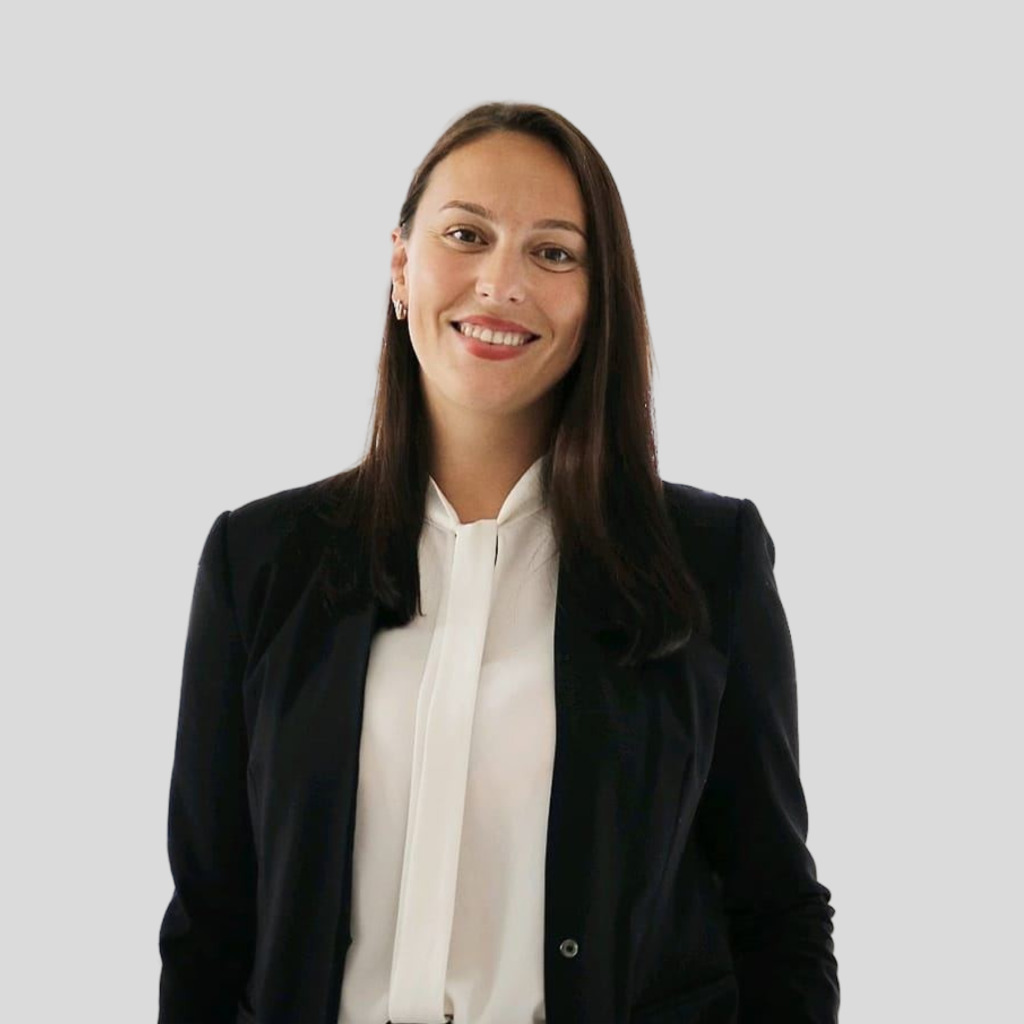
Meda Andrijauskienė, Professor and Vice-Dean for Research at KTU SEB

These results do not come from nowhere. At KTU School of Economics and Business, the development of project management skills is not limited to a single course. KTU SEB offers it across all cycles – from bachelor’s to doctoral level. One example is the School’s Master’s programme in Enterprise Management, which holds international IPMA REG accreditation and is aligned with the IPMA Individual Competence Baseline (ICB4).

KTU also offers non-degree, lifelong learning opportunities for business professionals, including programme “Project Management: Strategies, Processes and Tools”. Micromodules such as “The Golden Triangle: Scope, Time and Cost in Project Management” and “Project Stakeholder Engagement” bring together learners from across the ECIU University alliance, including those from Sweden, Norway, Germany, Ireland, Poland or Portugal.

According to the Project Management Institute, global demand for project professionals could grow by as much as 64% by 2035, potentially creating a shortage of almost 30 million qualified project professionals. For KTU, focusing on teaching project management is about preparing graduates to turn ideas into action and lead in project-based environments. And, hopefully, enjoy the challenge along the way!

Professor Farrukh Qureshi, who guided the team throughout the competition, also highlights the connection between academic knowledge and practical experience:

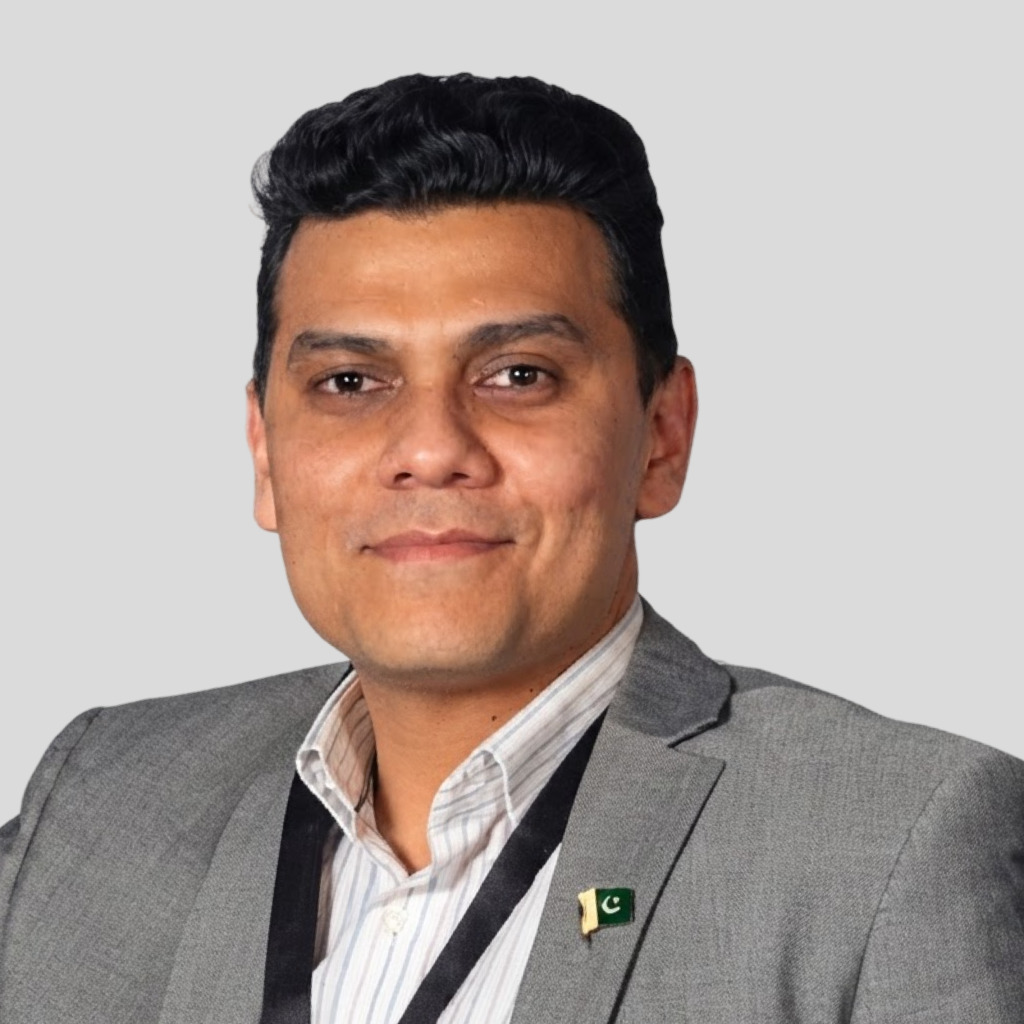
Professor Farrukh Qureshi

“Project-based learning helps students understand the practical implications of the theories they learn in class. Such competitions offer students the opportunity to work as a team to tackle a real challenge and help develop a greater level of problem-solving skills that an employer would expect. Competing in this level helps students understand the different components of project management not only from an academic perspective”.

Looking Ahead

Every team that competes for KTU SEB adds something to what the next one inherits, and this year, the experience in Athens is what the team leaves behind. It was demanding, unpredictable, and ultimately one of the most memorable experiences of their studies so far.

Future championships are already on KTU students’ minds, and so is a bigger goal: bringing the World Final to Kaunas one day.